What to See
5 highlights📍 Tap the pin for directions
The Vaporetto (Water Bus)
The vaporetto is Venice's public water bus system and the only way to get across the Grand Canal and between islands. A 24-hour travel pass covers unlimited trips. Take the #1 line the full length of the Grand Canal at least once — it's the best 45-minute boat ride in the world.
St. Mark's Basilica
The jewel of Byzantine architecture in the Western world — 8,000 square meters of golden mosaics. Book skip-the-line tickets online. The Pala d'Oro altarpiece and the Treasury require separate tickets but are worth it.
Getting Lost — On Purpose
Venice is designed to be confusing, and the best way to experience it is to put the phone away and wander. Every alley (calle) eventually leads to water or a campo (small square). Getting lost is not a problem — it's the whole point. The neighborhood of Cannaregio (north of the tourist center) feels like real Venetian life.
Burano
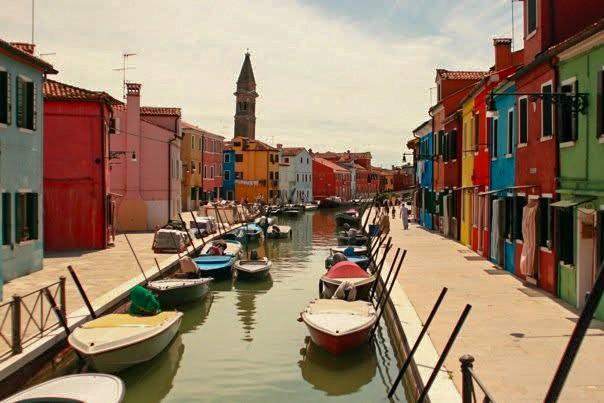
A small island of brightly colored fishermen's houses about 40 minutes by vaporetto from Venice. Not particularly sightseeing-dense, but visually extraordinary and much less crowded than Venice itself. Also the home of Venetian lace-making.
Murano
A small island known for its glass-making tradition. Take the vaporetto from Venice to reach this island, which offers a unique glimpse into Venetian craftsmanship.
Eat & Drink
go-to orderSpritz al Select
The spritz was invented in this region, and the true Venetian version uses Select — a bittersweet, ruby-red aperitivo distilled locally since the 1920s, distinct from the more internationally known Aperol. Order a "spritz Select" at a bacaro (small Venetian wine bar) around Campo Santa Margherita or Cannaregio for the local version rather than the sweeter Aperol spritz most tourists default to. Also look for the Bellini — a Prosecco and white peach purée cocktail invented at Harry's Bar near St. Mark's Square in the 1930s.
Cicchetti
Venice's answer to tapas — small plates of baccalà mantecato (whipped salt cod), marinated seafood, polpette (little meatballs), or cheese and cured meat on bread, eaten standing at a bacaro counter alongside a glass of ombra (Venetian for a small glass of wine). Cannaregio and the area around the Rialto Market have the highest concentration of good, unpretentious spots. It's the cheapest, most authentic way to eat well in a genuinely expensive city.
Sarde in Saor
A classic Venetian dish of fried sardines marinated in a sweet-and-sour mix of onions, vinegar, pine nuts, and raisins — originally developed by Venetian sailors as a way to preserve fish for long voyages. It's served cold or at room temperature, usually as a cicchetti plate or starter, and the sweet-sour combination is genuinely distinctive from mainland Italian cooking. Look for it on any traditional Venetian trattoria menu, especially around the Rialto.
Tiramisu
Tiramisu's origins are contested among several towns in the Veneto region (Treviso, just north of Venice, has the strongest claim), but it's the dessert most associated with this part of Italy — espresso-soaked ladyfingers layered with mascarpone cream and a dusting of cocoa. It's less a Venice-specific dish than a regional specialty, but it's on virtually every menu in the city and worth ordering from a proper kitchen rather than a tourist-trap café near St. Mark's.
Skip This
1 highlightsGondola Rides — Do the Math
Gondola rides are expensive (~€80–100 ($86.40–$108 USD) for 30 minutes), and the canals are identical to what you see from the bridges and from the vaporetto. Consider taking the traghetto instead — a gondola ferry that crosses the Grand Canal at several points for about €2 ($2.16 USD) per crossing. The same experience, the same boat, for 2% of the price.
Stay Safe
2 highlightsAcqua Alta (High Water)
Venice experiences periodic flooding, especially in autumn. Check local forecasts if visiting in October–December. Rubber boots are available for rent near flooded areas. The raised wooden walkways (passerelle) are deployed automatically.
Venice Is Very Safe
One of the safest major tourist destinations in Italy. The main inconvenience is the density of tourists in peak season, not crime.
Getting Around
2 optionsVaporetto for the Canals
The public water bus covers everywhere you need to go. The 24 or 48-hour passes are good value.
Walking Between Close Destinations
For nearby destinations within the sestieri (Venice's six districts), walking is often faster than waiting for a vaporetto. Venice is small — crossing the entire city on foot takes about 45 minutes.
Where to Stay
2 neighborhoods📍 Tap the pin for directions
In Venice Itself
Staying on the main island is the authentic Venice experience — waking up to the sounds of water and boats rather than traffic. Book well in advance; hotels fill early especially in carnival season (February) and summer.
Mestre (Mainland)
Dramatically cheaper than central Venice, with a short train connection. Significantly less atmospheric but useful for budget-conscious travelers.
When to Go
4 seasonsSpring (Mar–May)
Mild and increasingly pleasant, 50–68 °F (10–20° C), with occasional rain. April and May offer good light for photography and noticeably fewer crowds than summer, though Easter week gets busy. A strong all-around choice.
Summer (Jun–Aug)
Hot and humid, often 77–90 °F (25–32° C), with the canals adding to the mugginess and very little breeze in the narrow calli. Peak tourist season — St. Mark's Square and the Rialto are packed, and prices are at their highest.
Fall (Sep–Nov)
Comfortable through September and October (59–75 °F (15–24° C)), but acqua alta (seasonal high-water flooding) becomes a real consideration from October through December, especially around St. Mark's Square. Check tide forecasts if visiting in this window.
Winter (Dec–Feb)
Cold and often foggy or damp, 36–48 °F (2–9° C), with the highest acqua alta risk of the year. Also the quietest and most atmospheric season outside of Carnevale, and home to Venice's famous Carnival in February — see Popular Events.
What to Know
5 essentialsVisa-Free Today, ETIAS on the Horizon
EU citizens travel freely into Italy with a passport or national ID card. US citizens are currently visa-free for stays up to 90 days within any 180-day Schengen period. That changes later in 2026 when the EU's ETIAS authorization becomes mandatory for US citizens and other visa-exempt travelers — an online application costing roughly €7 and valid for three years. A six-month transition window is expected once it launches, so it's worth applying as soon as it opens rather than scrambling before a Venice trip.
Passport Validity for Schengen Entry
Your passport should have at least 3 months of validity remaining beyond your planned Schengen departure, with 6 months recommended as a safer cushion. It also shouldn't be older than 10 years from its issue date. Confirm both well before booking — a surprising number of travelers get flagged at check-in over exactly this detail.
Tipping Isn't the Norm in Venice
Tipping isn't customary in Italy generally, and Venice is no exception. Many restaurants add a small "coperto" cover charge to the bill instead of expecting a tip — look for that line before deciding whether to add anything extra. Rounding up for particularly good service is a nice gesture but entirely optional.
Euro (EUR) — Cards Work Nearly Everywhere
Italy's currency is the Euro, and cards are accepted at the vast majority of restaurants, hotels, and shops across Venice. Even so, keep some cash on hand for smaller bacari (wine bars), market stalls near the Rialto, and vaporetto ticket kiosks, where a quick cash transaction can be simpler.
Worth Knowing Before You Arrive
The legal drinking age is 18. Venice has its own well-known rules against sitting on bridges, steps, or in narrow calli in ways that block foot traffic, plus fines for swimming in the canals — take posted signage seriously. Venice also charges a day-tripper entry fee on certain high-traffic dates for visitors not staying overnight, so check the current calendar before you plan a day visit. Recreational drug laws are enforced as elsewhere in Italy.
Popular Events
1 annual eventCarnevale di Venezia (Carnival of Venice)
Ten days leading up to Shrove Tuesday, Jan/FebOne of the most iconic festivals in the world — ten days of elaborate masked costumes, historic Venetian dress, and staged events across the city, centered on Piazza San Marco and the Rialto area. Highlights include the "Flight of the Angel" (Volo dell'Angelo), where a costumed performer descends by wire into St. Mark's Square, and the Best Mask Contest. Mask shops around the city do their busiest trade of the year, and it's common to see fully costumed figures posing for photos along the canals and bridges.
Community Tips
1 tipsCicchetti — small Venetian bar snacks, similar to tapas — are the correct way to eat lunch in Venice. Bar-hop through Cannaregio or Rialto's bacari (wine bars), trying a glass of local wine and a few cicchetti at each stop. Better food, better atmosphere, and far cheaper than sitting restaurants.