

What to See
5 highlights📍 Tap the pin for directions
Gateway of India & the Taj Mahal Palace Hotel
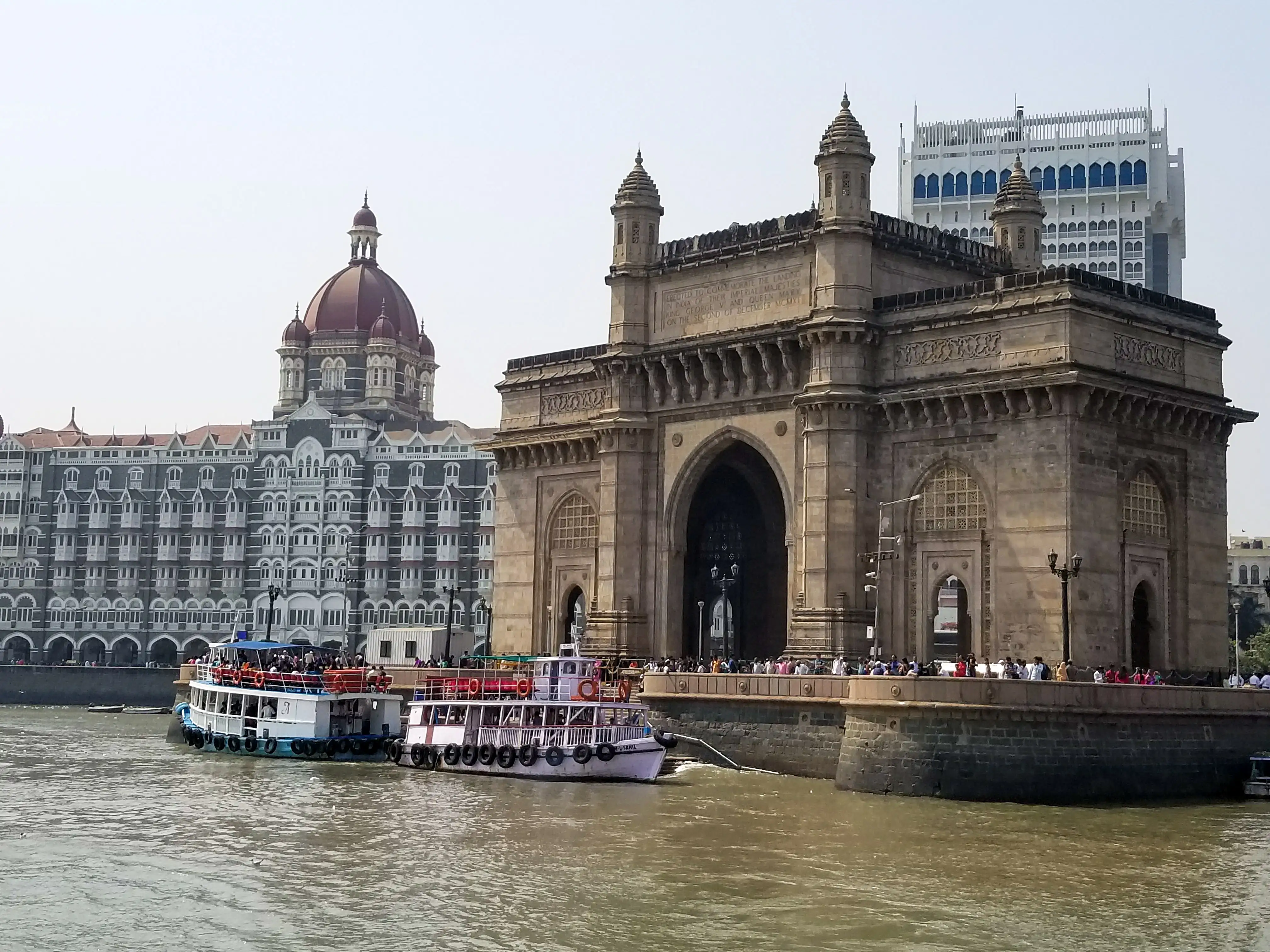
The Gateway of India — a massive basalt arch built in 1924 to commemorate a royal visit — stands at the edge of Mumbai Harbour and is the city's defining landmark. The view from the waterfront looking back at the Taj Mahal Palace Hotel directly behind the Gateway is one of the great urban compositions in Asia.
The Taj Mahal Palace Hotel (not the same as the Agra Taj Mahal — this is Mumbai's iconic five-star hotel, opened in 1903) is directly adjacent to the Gateway. It became internationally known after the 2008 Mumbai terrorist attacks, in which gunmen sieged the hotel for three days. The hotel has been restored and continues to operate. Even if you're not staying here, walk into the lobby — the original heritage wing's interior, with its Moorish domes, sweeping staircases, and handmade tilework, is extraordinary. No one will stop you if you're dressed reasonably well.
Elephanta Island — Caves, Seagulls, and Monkeys
A one-hour ferry from the Gateway of India waterfront takes you to Elephanta Island, home to a network of rock-cut cave temples dedicated to Shiva, dating from the 5th–8th centuries. The main Shiva cave is enormous and the carvings — particularly the three-faced Shiva bust known as Trimurti — are some of the finest examples of ancient Indian sculpture.
The ferry ride: As the boat crosses the harbour, seagulls fly alongside and dive for any food held above the railing. Keep your snacks inside the bag or they will be taken directly from your hand.
On the island: The path from the ferry landing to the caves is lined with vendors and is uphill. More importantly — if you have food out, put it away immediately. The monkeys on Elephanta Island are bold and will grab food, bags, or anything that looks interesting. They are not dangerous if you don't engage, but they are persistent and fast. Do not feed them and do not hold food visibly. The caves themselves are UNESCO listed and require about 1.5–2 hours.
Marine Drive — Queen's Necklace
The 3.6km promenade sweeping along the Arabian Sea coastline from Nariman Point to Malabar Hill. At night, the curve of streetlights along the waterfront gives it the name 'Queen's Necklace.' Walking Marine Drive in the evening — with the sea breeze and the city skyline behind you — is one of Mumbai's essential free experiences. Early morning brings joggers and yoga practitioners; sunset brings everyone. The Art Deco buildings lining the road behind the promenade are some of the finest examples of 1930s Art Deco architecture in the world.
Dharavi & Dhobi Ghat — The Real Mumbai
Dhobi Ghat (visible from a bridge near Mahalaxmi station) is the world's largest open-air laundry — hundreds of workers washing, beating, and drying clothes for Mumbai's hotels and households in an extraordinary open-air assembly line. View it from the bridge above for free.
Dharavi, often misrepresented as simply a 'slum,' is actually one of the largest and most productive informal economic zones in Asia — a city within a city with thriving industries in leather, pottery, recycling, and food production. Several responsible tour operators offer guided walks.
Eat Local — Mumbai's Street Food and Restaurants
Mumbai has one of India's richest food cultures. Don't eat only at hotel restaurants. The city's local restaurants serve extraordinary food at a fraction of hotel prices.
Must try: Vada pav — a spiced potato fritter in a bread roll, Mumbai's street food equivalent of a burger, available from vendors everywhere. Pav bhaji — a thick vegetable curry served with buttered bread rolls. Bhelpuri — a crispy puffed rice snack mixed with chutneys and vegetables. For sit-down meals, Britannia & Co. (Ballard Estate, Irani café open since 1923) is legendary — order the berry pulao. Leopold Café (Colaba) is historically significant — also affected in the 2008 attacks — and serves reliable food in a famous setting.