

What to See
9 highlights📍 Tap the pin for directions
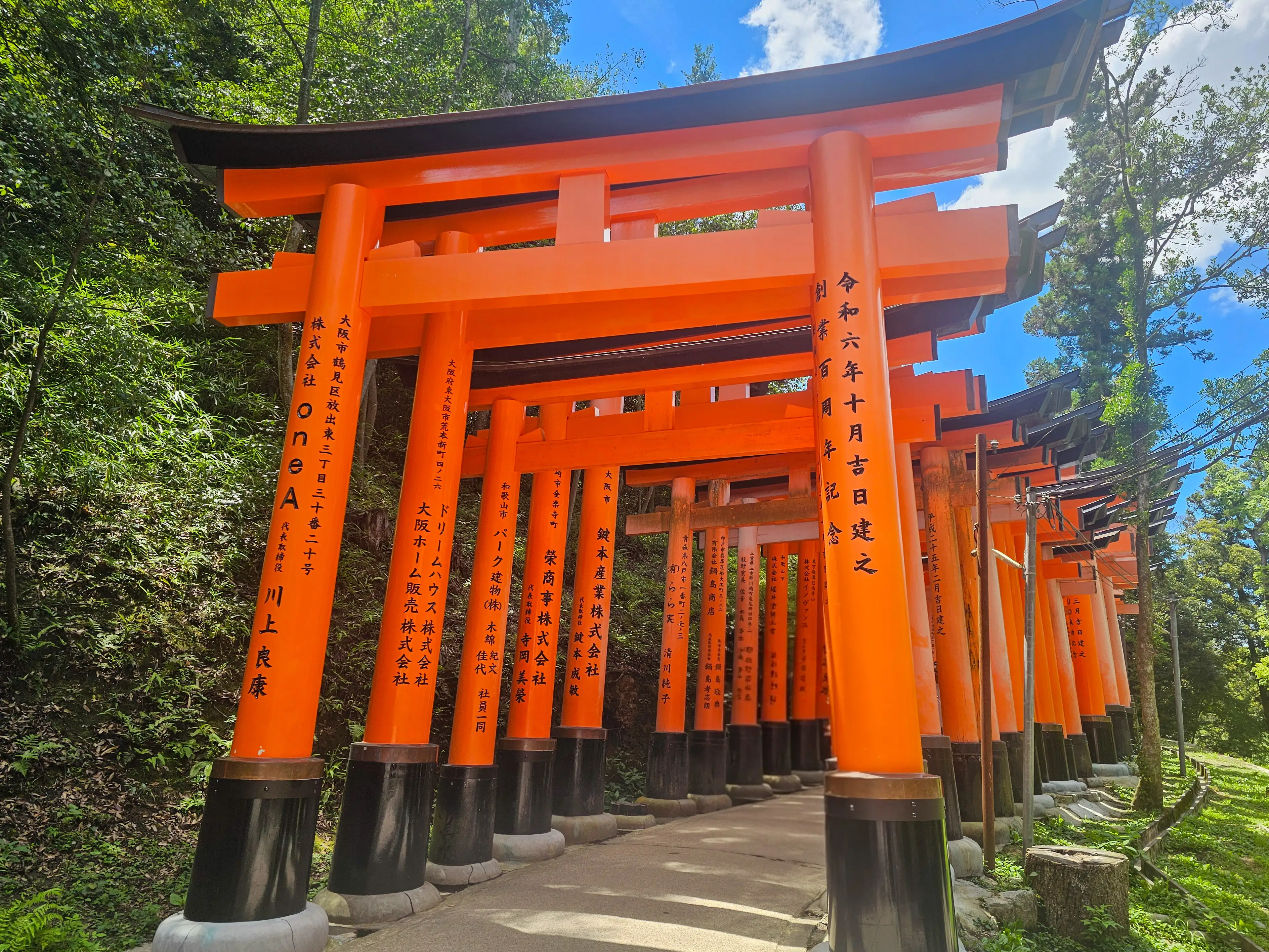
Fushimi Inari Shrine
Thousands of vermillion torii gates winding up a mountain. Crowds thin rapidly past the first 15 minutes of walking — keep going. Allow 2–3 hours to reach the summit and back.
Arashiyama Bamboo Grove
Dense towering bamboo creating a cathedral-like canopy. Arrive before 7am or after 5pm — by 9am it's wall-to-wall tourists.
Kinkaku-ji (Golden Pavilion)
The gold-leafed temple reflected in its mirror pond is one of the most beautiful sights in Japan. Buy timed tickets online in advance — the walk-up queue wastes an hour minimum.
Philosopher's Path
A canal-side walking path connecting several temples. Beautiful in any season. Start at Ginkauku-ji, walk it slowly — the real draws are the side-street cafés and small shrines along the way. Once you reach the end of the path in Nanzen-ji, you're just a short walk to the Tozei (Red) line.
Gion District at Night
Kyoto's historic geisha district lit by stone lanterns at dusk. One of the best free experiences in Japan. You may spot a real maiko hurrying to an appointment — observe from a distance and never approach for photos.
Ryoan-ji Zen Garden
The most famous rock garden in Japan — fifteen stones arranged in raked gravel so that you can never see all of them from any single viewing point. Quiet and genuinely contemplative, especially in early morning.
Kiyomizu-dera
A UNESCO World Heritage temple built on a hillside, famous for its massive wooden stage jutting out over the valley — no nails used in the construction. The approach up Higashiyama's preserved streets (Sannenzaka and Ninenzaka) is as much a highlight as the temple itself. Very popular — go early morning or consider the evening illumination during special seasonal openings.
Gekkeikan Ōkura Sake Museum
A small, well-preserved sake brewery museum in the Fushimi district, one of Japan's most historic sake-producing areas thanks to its natural spring water. Walk through original Edo/Meiji-era brewing equipment and finish with a tasting of a few varieties (including one only available on-site). Easily paired with a stroll through Fushimi's canal-side streets and, if you have time, Fushimi Inari Shrine nearby.
Kifune Shrine
A riverside shrine tucked into the mountains north of the city, dedicated to the god of water. Famous for its glowing stone-lantern-lined staircase entrance and, in summer, kawadoko riverside dining platforms built over the cool mountain stream. Quieter and greener than the central Kyoto temples — a good half-day escape from the crowds.
Take the Eizan Railway (Kurama line) from Demachiyanagi Station to Kibuneguchi Station (about 25–30 minutes). From Kibuneguchi, it's a 30-minute walk uphill along the river to the shrine, or hop on the Kyoto Bus (bound for Kifune) right outside the station for a 5-minute ride. Combine with a stop in Kurama, one stop further up the same line, home to Kurama-dera temple and its own mountain trail.